Blueberry Lemon Sourdough Bread
Highlighted under: Pastry Love
I absolutely love baking this Blueberry Lemon Sourdough Bread, especially when summer is in full swing. The combination of tangy blueberries and zesty lemon creates a delightful explosion of flavors that I just can't resist. This recipe allows the natural sourdough culture to shine, while the fruity additions make it a perfect companion for breakfast or an afternoon treat. The aroma that fills my kitchen while this bread bakes adds to the excitement, making it a cherished family favorite that I love to share.
When I first experimented with blueberry lemon sourdough, I was surprised by how beautifully the flavors harmonized. I decided to incorporate fresh lemon zest and juice, which elevates the bread by adding brightness. The blueberries not only provide sweetness but also a lovely pop of color. I quickly learned that adjusting the hydration can be key to achieving the perfect crumb, so don't be afraid to tweak the water slightly if needed.
As I played around with different techniques, I found that using a long, slow fermentation time allowed the flavors to develop fully while maintaining a moist texture. The result is a crusty exterior that hugs a fluffy, tangy center. To make the process easier, I ensure that my sourdough starter is well-fed and bubbly before starting, which contributes to that delightful rise.
Why You'll Love This Recipe
- Deliciously tart blueberries complement the bright lemon flavor
- Chewy crust with a soft, airy crumb
- Perfect for toasting and spreading butter or jam
The Art of Sourdough Fermentation
Understanding the fermentation process is crucial for this Blueberry Lemon Sourdough Bread. During bulk fermentation, the naturally occurring wild yeast in your sourdough starter works alongside the bacteria to create a complex flavor profile. Make sure to keep your dough at a consistent room temperature, ideally between 75°F and 80°F (24°C to 27°C). This temperature range allows for optimal yeast activity without risking over-fermentation, where the dough can become too sticky or develop overly sour flavors.
Performing stretch and folds during the first two hours helps develop gluten strength and structure in your dough. Use wet hands to avoid sticking and stretch the dough from one side and fold it over itself, creating tension. After the initial stretch and folds, incorporating the blueberries gently is key. If you press them in too hard, they can break and create purple streaks throughout the dough, which may not be desired. Instead, fold them in carefully to maintain your dough's overall texture.
Shaping Techniques for Perfect Loaves
When shaping your sourdough, it's important to create surface tension in the loaf, which significantly influences the final rise and crumb structure. After turning the dough out onto a floured surface, pat it down gently and fold it like an envelope: bring the top down, then the sides, and finally the bottom up. This technique will help round out the dough effectively, ensuring that it holds its shape during the second rise and while baking.
If you're new to shaping, don’t worry about achieving perfection on the first try. Practice makes perfect! Just remember to dust your hands and the dough lightly with flour to prevent sticking. The top of the loaf should feel smooth and taut, which is a good indicator that you’ve successfully achieved the right tension for a well-risen loaf.
Storing and Serving Suggestions
This Blueberry Lemon Sourdough Bread is best enjoyed fresh, but if you find yourself with leftovers, there are easy ways to store it. To keep it fresh for up to three days, place the bread in a paper bag at room temperature—avoid plastic, as it can trap moisture and lead to a soggy crust. If you want to preserve it longer, consider slicing the bread and freezing it. Wrap individual slices in plastic wrap and store them in a freezer bag. You can toast them directly from frozen for a delicious treat.
For serving, this bread pairs wonderfully with creamy spreads like mascarpone or simple butter. You can also elevate the experience by trying it with a drizzle of honey or a sprinkle of additional lemon zest. If you're feeling adventurous, consider making a French toast dish with this bread—a delightful combination of fluffy, fruity, and zesty that's perfect for brunch!
Ingredients
Gather your ingredients before starting this recipe to ensure a smooth baking experience.
For the Dough
- 500g bread flour
- 350g active sourdough starter
- 300g lukewarm water
- 10g salt
- Zest of 1 lemon
- 50g fresh lemon juice
- 200g fresh blueberries
Make sure to wash the blueberries gently before adding them to the dough. This ensures they stay intact during the mixing process.
Instructions
Follow these steps carefully for a successful bake.
Mix the Dough
In a large bowl, combine the bread flour and lukewarm water. Mix until no dry flour remains, then cover and let it rest for 30 minutes. After the autolyse, add the sourdough starter, lemon zest, lemon juice, and salt. Mix until fully incorporated.
Bulk Fermentation
Cover the bowl with a damp cloth and let it ferment at room temperature for 3 hours, performing stretch and folds every 30 minutes for the first 2 hours. Gently fold in the blueberries during the last stretch.
Shape the Dough
Once the dough has increased in size, gently turn it out onto a floured surface. Shape it into a round loaf by folding in the edges towards the center, then flip it over seam side down.
Second Rise
Place the shaped dough into a floured proofing basket or bowl. Cover and let it rise for another 1 to 2 hours, or until slightly puffy.
Preheat and Bake
Preheat the oven to 450°F (230°C) with a Dutch oven inside. Carefully transfer the loaf into the preheated Dutch oven, cover, and bake for 30 minutes. Remove the lid and bake for an additional 10 minutes until golden brown.
Cool and Serve
Let the bread cool on a wire rack for at least 30 minutes before slicing. This ensures the crumb sets properly and retains moisture.
Enjoy your freshly baked Blueberry Lemon Sourdough Bread warm or toasted, ideally with a spread of butter or your favorite jam!
Pro Tips
- Use fresh blueberries for the best flavor and appearance. Store any leftovers wrapped in a cloth to keep the crust crusty.
Ingredient Insights
The use of fresh blueberries is key in this recipe, as they provide natural sweetness and moisture. If fresh blueberries are out of season or unavailable, you can substitute them with frozen blueberries. Just be sure to add them directly from the freezer, as thawing can lead to excess moisture in your dough. Additionally, the lemon juice and zest play a pivotal role in brightening the flavor, cutting through the richness of the bread. Consider using a high-quality, organic lemon for the best flavor.
Using a strong bread flour (with a higher protein content) is essential for achieving a chewy crust and airy crumb in your sourdough bread. If you prefer a lighter loaf, consider substituting a portion of the bread flour with whole wheat flour. This could add a nutty flavor and enhance the nutritional profile, although you may need to adjust the hydration slightly, as whole wheat flour can absorb more water.
Troubleshooting Common Issues
If your bread comes out denser than expected, it may be an indication that the dough did not ferment long enough. Ensure that your room temperature is warm enough to promote yeast activity. On the flip side, if you notice excessive sourness and a sticky dough, it could mean you over-fermented it or used an overly active starter. Keeping an eye on your dough during fermentation is crucial for achieving that perfect balance of flavors.
Another common issue is achieving a crisp crust. If your crust is softer than desired, try placing a pan of water in the oven during baking or using a baking stone to help retain moisture and create steam. Additionally, avoid overproofing your loaf, as this can make it more prone to a soggy or pale crust. Aim for a beautifully golden-brown crust and a hollow sound when tapping the bottom of the loaf to indicate doneness.
Variations to Try
While this recipe shines on its own, it's fun to experiment with different flavors. Consider adding chopped herbs, such as thyme or rosemary, for an earthy twist. Alternatively, you could incorporate nuts like walnuts or pecans for added crunch. These toppings can enhance the texture and create a wonderful contrast with the soft crumb and juicy blueberries.
For a unique seasonal touch, try replacing the blueberries with other berries such as raspberries or blackberries. You can also tweak the acidity level of the bread by adjusting the amount of lemon juice or zest you use. This flexibility lets you cater the bread to your personal taste preferences or seasonal availability of fruits.
Questions About Recipes
→ Can I use frozen blueberries?
Yes, but it’s best to thaw and drain them before incorporation to prevent excess moisture in the dough.
→ What can I substitute for lemons?
If you don't have lemons, you can use limes for a different zesty flavor.
→ How long will the bread last?
The bread is best consumed within 3 days but can also be sliced and frozen for up to 2 months.
→ Can I make this recipe vegan?
Yes, you can use water and substitute the sourdough starter with a gluten-free version using the same measurements.
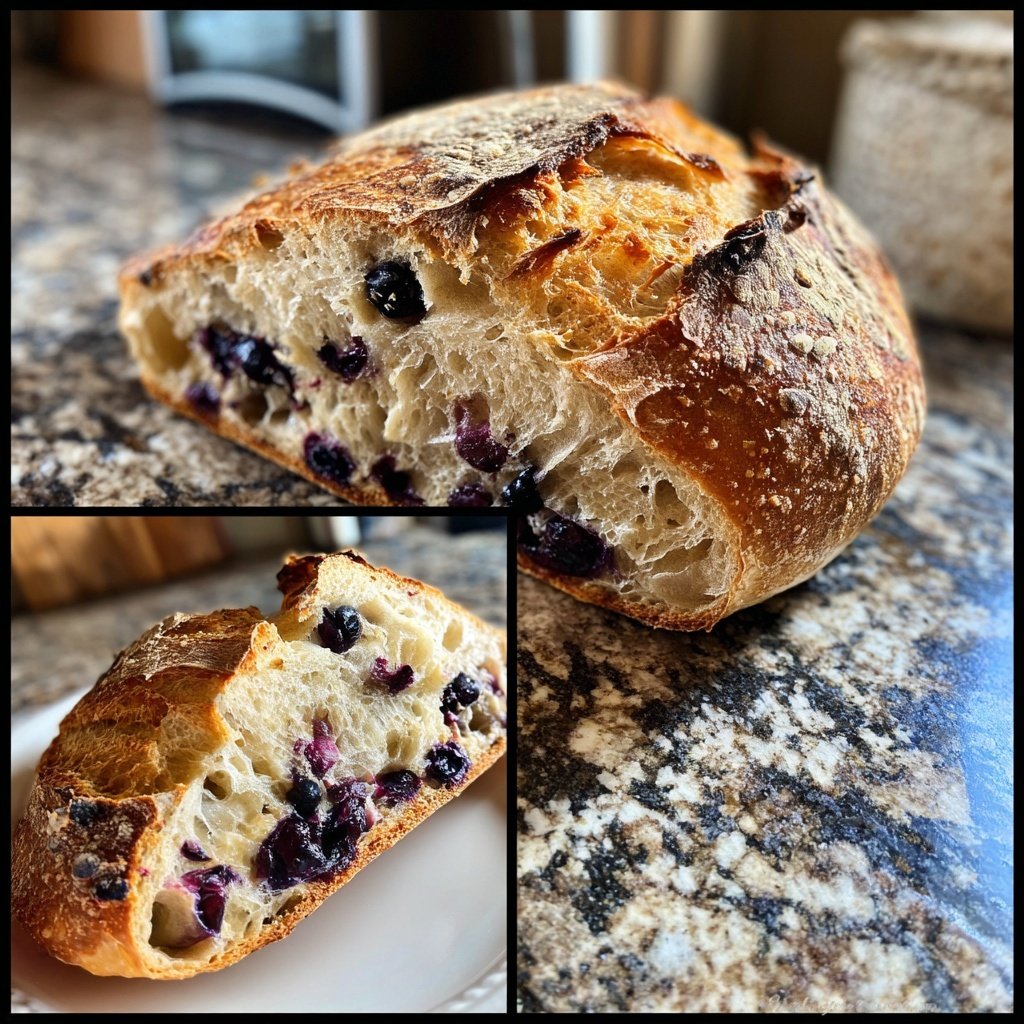
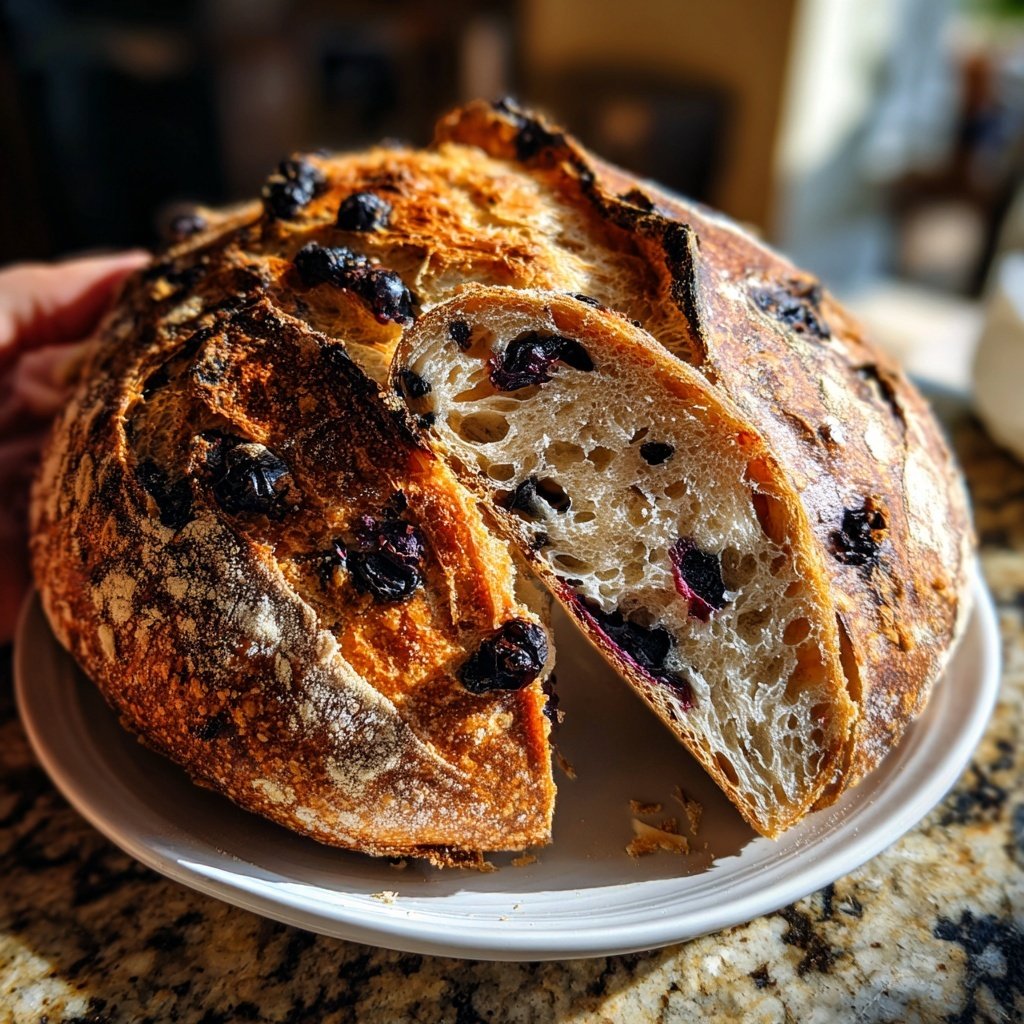
Blueberry Lemon Sourdough Bread
Created by: Keira Thompson
Recipe Type: Pastry Love
Skill Level: Intermediate
Final Quantity: 1 loaf
What You'll Need
For the Dough
- 500g bread flour
- 350g active sourdough starter
- 300g lukewarm water
- 10g salt
- Zest of 1 lemon
- 50g fresh lemon juice
- 200g fresh blueberries
How-To Steps
In a large bowl, combine the bread flour and lukewarm water. Mix until no dry flour remains, then cover and let it rest for 30 minutes. After the autolyse, add the sourdough starter, lemon zest, lemon juice, and salt. Mix until fully incorporated.
Cover the bowl with a damp cloth and let it ferment at room temperature for 3 hours, performing stretch and folds every 30 minutes for the first 2 hours. Gently fold in the blueberries during the last stretch.
Once the dough has increased in size, gently turn it out onto a floured surface. Shape it into a round loaf by folding in the edges towards the center, then flip it over seam side down.
Place the shaped dough into a floured proofing basket or bowl. Cover and let it rise for another 1 to 2 hours, or until slightly puffy.
Preheat the oven to 450°F (230°C) with a Dutch oven inside. Carefully transfer the loaf into the preheated Dutch oven, cover, and bake for 30 minutes. Remove the lid and bake for an additional 10 minutes until golden brown.
Let the bread cool on a wire rack for at least 30 minutes before slicing. This ensures the crumb sets properly and retains moisture.
Extra Tips
- Use fresh blueberries for the best flavor and appearance. Store any leftovers wrapped in a cloth to keep the crust crusty.
Nutritional Breakdown (Per Serving)
- Calories: 280 kcal
- Total Fat: 4g
- Saturated Fat: 0g
- Cholesterol: 0mg
- Sodium: 270mg
- Total Carbohydrates: 54g
- Dietary Fiber: 3g
- Sugars: 8g
- Protein: 7g